Saturday, December 23, 2006

SPREAD THE WORD - NOT THE PLASTIC!


WASTE PLASTIC AS
AN ALTERNATIVE ENERGY?

ABSOLUTELY.

- SPREAD THE WORD- NOT THE PLASTIC!


Saturday, July 22, 2006

PENN STATE Agricultural August Fair - See you there!

Many visitors to Penn State's Ag Progress Days rely on its research tours to get a convenient overview of the university's latest scientific innovations -- and riding always beats walking at the 1,500-acre Russell E. Larson Agricultural Research Center. So planners are making it easier than ever to take the free bus tours during this year's event, set for Aug. 15-17 at Rock Springs.
ENERGY FROM AGRICULTURE FEATURED AT AG PROGRESS DAYS AUG. 15-17
UNIVERSITY PARK, Pa. -- Penn State's College of Agricultural Sciences, the Pennsylvania Department of Agriculture and a number of private businesses will team up to offer a glimpse at the future of green energy in the Keystone State at Ag Progress Days, Aug. 15-17.
UNIVERSITY PARK, Pa. -- Ag Progress Days, Pennsylvania's largest outdoor agricultural exposition, will return for its annual three-day run, Aug. 15-17. Sponsored by Penn State's College of Agricultural Sciences, the event is held at the Russell E. Larson Agricultural Research Center at Rock Springs, nine miles southwest of State College on Pa. Route 45.

Wednesday, July 12, 2006

PLASTIC IS FINE - DISPOSAL SOLUTION EXISTS!

Today, every vital sector of the economy starting from agriculture to packaging, automobile, building construction, communication or info tech have been virtually revolutionized by the applications of plastics. Use of this non-biodegradable (according to recent studies, plastics can stay as long as 4500 years on earth) product is growing rapidly and the problem is that what to do with plastic-waste. If a ban is put on the use of plastics on emotional grounds, the real cost would be much higher, the inconvenience much more, the chances of damage or contamination much greater, the risks to the family health and safety would increase and, above all the environmental burden would be manifold. Hence the question is not ‘Plastics vs No Plastics’ but it is more concerned with the judicious use and re-use of plastic-waste.

Monday, July 3, 2006

WASTE PLASTIC A VIABLE ALTERATIVE ENERGY


Plasticulture 2006
Thursday, November 2 through Sunday, November 5
San Antonio, Texas
The Congress will be held in conjuction with The Irrigation Association's 27th International Irrigation Show.
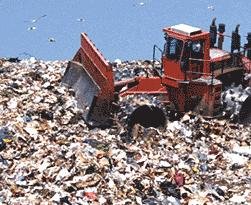
Photo - Is this the world's legacy? A land of plastic waste? Change it!

Sunday, July 2, 2006

Great Britain Leading in Plastic Reduction?

Great Britain leading in Plastic Reduction? Perhaps and perhaps not however they have identified the enemy. View this report..

Each year about 550,000 tonnes of non-natural wastes are generated on farms in England, of which it is estimated that about 85,000 tonnes is waste plastic. Over 90% of holdings produce plastic waste, with packaging waste estimated to be about 21,000 tonnes each year and non-packaging plastic waste estimated at about 65,000 tonnes per year. This latter figure is bolstered by the high levels of contamination (soil and other debris) associated with silage wrap and horticultural films, as the following table highlights.

Non-Packaging Plastics
England
Wales
Scotland
Northern Ireland

UK Total (tonnes per year)
Silage film plastic
12,425
5,016
5,029
2,530
25,000

Silage film plastic + contamination
24.851
10,032
10,058
5,060
50,000

Greenhouse and tunnel film
468
10
12
11
500

Mulch film + crop cover
3,738
30
657
76
4,500

Mulch film, crop cover + contamination
18,689
148
3,238
380
22,500

Cores for silage wrap
703
339
327
138
1,506

Other horticultural plastics
5,617
114
143
127
6,000

Bale twine and net wrap
7,934
821
1,683
662
11,100

Tree guards
6,694
532
4,492
182
11,900

Total Non-Packaging Plastics
37,579
6,860
12,341
3,726
60,506

Total Non-Packaging Plastics (Inc. contamination)
64,956
11,994
19,997
6,559
103,506

Plastic Packaging (again in tonnes)

Agrochemical packaging
1,720
30
276
374
2,400

Fertiliser bags
8,748
984
1,654
815
12,200

Seed bags
840
15
134
12
1,000

Animal feed bags
6,419
1,283
2,019
1,680
11,400

Animal health packaging
444
105
124
76
750

Oil containers
501
47
84
38
669

Miscellaneous packaging
2,063
331
1,166
240
3,800

Total plastic packaging
20,734
2,794
5,457
3,235
32,219

TOTAL PLASTIC WASTE 135,725
Source of information: Environment Agency's Agricultural Waste Survey 2003
The Government has introduced new regulations to apply waste management controls to agricultural waste for the first time that will affect about 137,000 farms in England and Wales from 15 May 2006. Prior to this, much of the non-natural waste arising on farms was either buried or burned in an uncontrolled manner.

Farmers and growers have identified plastic waste as a priority waste stream for which least-cost disposal and recovery options are needed. Plastic wastes arising on farms can be bulky and dirty, making management difficult. Waste facilities in rural areas are often lacking and consequently transport of wastes off-farm can be costly.

The Challenge of recovering Agricultural Waste Plastic

Agricultural plastic packaging represents approximately 1.5% of the overall volume of plastic packaging in the waste stream in England. Furthermore, there are over 120,000 farm holdings producing approximately 21,000 tonnes of plastic packaging and 65,000 tonnes of non-packaging plastic. Of this non-packaging plastic, over 40% is contaminant. The average quantity of plastic generated per holding (without contaminant) is approximately 0.5 tonnes per annum.
As a comparison, the average recycling bank for plastic bottles collects 0.2 tonnes of plastic per week, with associated collection costs of £150 per tonne. This puts in context the challenge of developing an economic and environmentally sustainable method of collecting agricultural plastic.

The Agricultural Waste Plastics Collection and Recovery Programme is a positive move to help tackle these issues, with the provision of good practice guidance and key contacts for both farmers and collection companies alike.

Friday, April 7, 2006

'Impossible' for Canada to reach Kyoto targets!

'Impossible' for Canada to reach Kyoto targets:
Ambrose Last Updated Fri, 07 Apr 2006 18:17:49 EDT
CBC News
Canada has no chance of meeting its targets under the Kyoto accord and must set more realistic goals for cutting greenhouse gases, the federal environment minister says.
INDEPTH:
Kyoto
"My departmental officials and the department officials from natural resources have indicated that it is impossible, impossible for Canada to reach its Kyoto targets," Rona Ambrose said Friday.
"And let me be clear. I have been engaging with our international counterparts over the past month, and we are not the only country that is finding itself in this situation."
The international agreement requires Canada to cut its greenhouse gas emissions to six per cent below 1990 levels by 2012 .
But since 1990, emissions have gone up, with the latest figures showing an increase of almost 30 per cent.
Ambrose said the government might consider setting new targets.
"We have to work with all of our industry sectors that are obviously the causes of emissions and pollution on ways to reduce pollution and greenhouse gases and they're willing, they're very willing to work with the government. So that's our next step."
Countries that fail to meet their emissions targets by the end of the first commitment period (2012) must make up the difference plus a penalty of 30 per cent in the second commitment period.

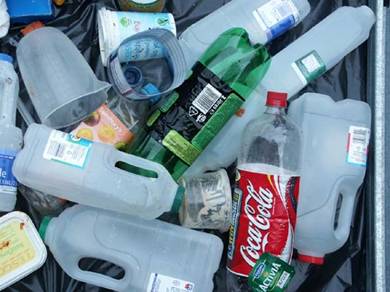
Waste Plastic Technology solutions from GR-Technologies, Korea, can ideally be a part of reducing Global concerns with respect to global warming. The unrecycled dirty plastic from Agriculture and Industrial sources are reusable being converted to clean, economical Heat & Power. Independent Tests show amazing results. Not only safe emissions, but a contributor to the electricity grid, and a method of reducing world landfills. Even with plastics that recycle, such items as plastic water bottles are a menace. Less than 11% are actually recovered.

Thursday, April 6, 2006

GREENHOUSE HEATING AND POWER UPDATE

Update on Waste Plastics
by Penn State Ag Engineer Jim Garthe
appears in Vegetable and Small Fruit Gazette (Mar. ’06).

Garthe reports on efforts to get a Korean company, GR Technologies, to build a factory in Allegheny County, Pennsylvania to manufacture plastic-fueled burners to heat greenhouses and other agricultural structures. “In the foreseeable future,” Garthe writes, “businesses will evolve to accept and densify your waste plastics into fuel. With the GR Technologies burner, you will then be able to cleanly burn these wastes to heat greenhouses or other structures. "

http://garden.cas.psu.edu/vegcrops/newsletterlist.html other sites to peruse http://plasticulture.cas.psu.edu/furnace.htm
and
http://www.americanplasticscouncil.com/s_apc/index.asp and http://www.plasticulture.org/index.shtml Opportunities for GR-Technologies Plastic Burner Technology and the Agricultural use and disposal of plastics.

Mark Your Calendars
Plasticulture 2006
Thursday, November 2 through Sunday, November 5
San Antonio, Texas
The Congress will be held in conjuction with
The Irrigation Association's 27th International Irrigation Show.